...

Become an AMP Member! LEARN MORE

Blog

Resin Driveway vs Tarmac vs Concrete: Pros, Cons & Costs

May 9, 2026

Choosing a new driveway is not just about how it looks on day one. Most homeowners are trying to balance cost, durability, maintenance, and long-term performance. That is why comparisons like resin driveway vs tarmac and resin driveway vs concrete are so common.

Each material has its place, but they perform very differently over time, especially in Ireland’s climate. In this guide, we break down the pros, cons, and costs of resin, tarmac, and concrete so you can make a clear, informed decision.

Overview of resin, tarmac, and concrete driveways

Before comparing them directly, it helps to understand what each surface actually is and how it works.

A resin bound driveway is made by mixing resin with natural aggregates and laying it as a smooth, permeable surface. It is designed to allow water to drain through while maintaining a clean, modern finish.

Tarmac is a flexible surface made from bitumen and aggregates. It is widely used because it is cost-effective and quick to install, but it is impermeable and relies on drainage systems.

Concrete is a solid, rigid surface that is poured and set in place. It is known for strength and longevity but lacks flexibility and permeability.

Each of these materials behaves differently under load, weather, and daily use.

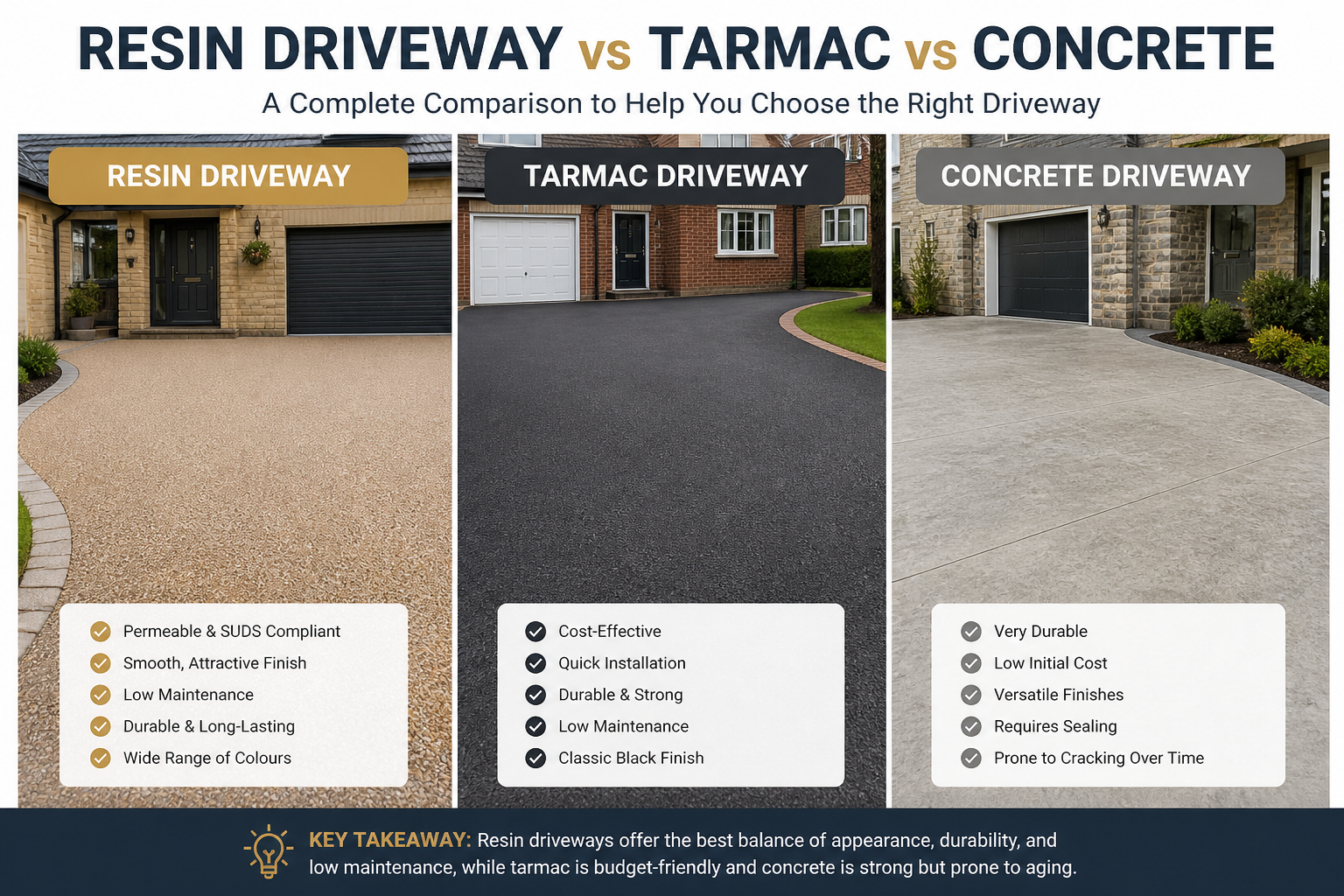
resin driveway vs tarmac vs concrete

Resin driveway vs tarmac: Key differences

When comparing resin driveway vs tarmac, the main differences come down to appearance, drainage, and long-term maintenance.

Resin driveways offer a much more refined finish. They are available in a range of natural stone colours and create a smooth, seamless surface. Tarmac, by comparison, has a more basic look and is usually limited to a dark, uniform finish.

From a drainage perspective, resin bound surfaces are permeable, meaning water drains through the surface. Tarmac is not permeable, so water runs off and requires proper drainage planning.

In terms of maintenance, tarmac can soften in hot weather and may develop marks or depressions over time, especially where vehicles are parked regularly. Resin surfaces, when installed correctly, tend to hold their shape better and require less ongoing repair.

Resin driveway vs concrete: What to expect

Looking at resin driveway vs concrete, the comparison shifts more towards flexibility and long-term appearance.

Concrete is a strong material, but it is rigid. Over time, this can lead to cracking, especially in areas where the ground moves slightly or where temperature changes occur. Once cracks appear, they can be difficult to repair without affecting the overall look.

Resin, on the other hand, has a degree of flexibility. This allows it to absorb minor movement without cracking, which is a significant advantage for residential driveways.

Another key difference is permeability. Concrete is impermeable, so water sits on the surface or runs off. Resin bound systems allow water to pass through, reducing puddles and improving drainage.

Visually, resin also offers more variety, while concrete tends to have a more industrial appearance unless additional finishes are applied.

Cost Comparison: Resin vs tarmac vs concrete

Cost is often one of the deciding factors when choosing a driveway. However, it is important to consider both initial cost and long-term value.

Driveway Cost Comparison in Ireland

Tarmac

Average Cost €50–€90 per m²
Lifespan 10–20 years
Maintenance Medium

Concrete

Average Cost €70–€120 per m²
Lifespan 20–30 years
Maintenance Medium

Tarmac is usually the cheapest option upfront, which is why it remains popular. Concrete sits in the middle range, while resin is typically the highest initial investment.

However, resin often provides better long-term value due to lower maintenance and fewer repairs. Tarmac may need resurfacing over time, and concrete repairs can be more noticeable and costly.

Durability and performance in Irish weather

Ireland’s climate is a key factor when comparing driveway materials. Frequent rain and damp conditions mean that drainage and water resistance are essential.

Resin bound driveways perform well because they are permeable. Water drains through the surface, reducing the risk of puddles and water damage. This makes them particularly suitable for Irish conditions.

Tarmac handles weather reasonably well but can soften during warmer periods and may develop wear in high-traffic areas.

Concrete is durable but can be affected by moisture and temperature changes over time, leading to cracks or surface wear.

When looking at long-term performance, resin offers a strong balance between durability and weather resistance.

Maintenance and long-term upkeep

Maintenance is often overlooked when choosing a driveway, but it plays a big role in long-term satisfaction.

Resin driveways are relatively low maintenance. Regular sweeping and occasional cleaning are usually enough to keep them in good condition.

Tarmac may require periodic sealing and repairs, especially as it ages. Oil stains and surface wear can also be more visible over time.

Concrete can require cleaning and may need repairs if cracks develop. While it is durable, maintaining a consistent appearance can be more challenging.

For homeowners who want a surface that stays clean and requires minimal effort, resin is often the preferred choice.

Final thoughts

When comparing resin driveway vs tarmac and resin driveway vs concrete, it becomes clear that each material offers different strengths.

Resin driveways provide a modern, permeable surface with low maintenance and strong long-term performance. Tarmac offers affordability and simplicity, while concrete delivers strength but with less flexibility and higher risk of visible wear.

For homeowners who want a balance of appearance, usability, and durability, resin is often the most complete solution.

Frequently Asked Questions

Is a resin driveway better than tarmac?

Resin is generally better in terms of appearance, drainage, and maintenance. Tarmac is cheaper upfront but may require more upkeep over time.

Resin offers better flexibility and drainage, while concrete is more rigid. Resin is less likely to crack and usually provides a more modern finish.

Tarmac is usually the cheapest option upfront. Resin is more expensive initially but can offer better long-term value.

Concrete can last the longest in ideal conditions, but resin offers a strong lifespan with better appearance and lower maintenance.

Resin bound driveways are very well suited to Irish weather because they are permeable and handle rain effectively.

Seraphinite AcceleratorBannerText_Seraphinite Accelerator
Turns on site high speed to be attractive for people and search engines.