...

Become an AMP Member! LEARN MORE

Blog

Is a Resin Driveway Permeable? SuDS Compliance Explained

March 7, 2026

When planning a new driveway, many homeowners ask an important question: is a resin driveway permeable? The answer is yes — but only when the correct system is installed. A properly constructed permeable resin driveway allows rainwater to drain naturally through the surface rather than running off into drains or creating puddles.

This drainage capability is closely connected to SuDS (Sustainable Drainage Systems) compliance, which is increasingly important in modern driveway design across Ireland. Understanding how resin surfaces manage water helps homeowners choose a driveway that is both practical and environmentally responsible.

What does “permeable” mean for a driveway?

A permeable driveway is designed to allow water to pass through the surface and into the ground beneath. Instead of water flowing across the driveway and into drainage systems, it filters slowly through the structure of the material.

This approach reduces the risk of surface flooding, improves water management around the property, and helps maintain natural drainage patterns.

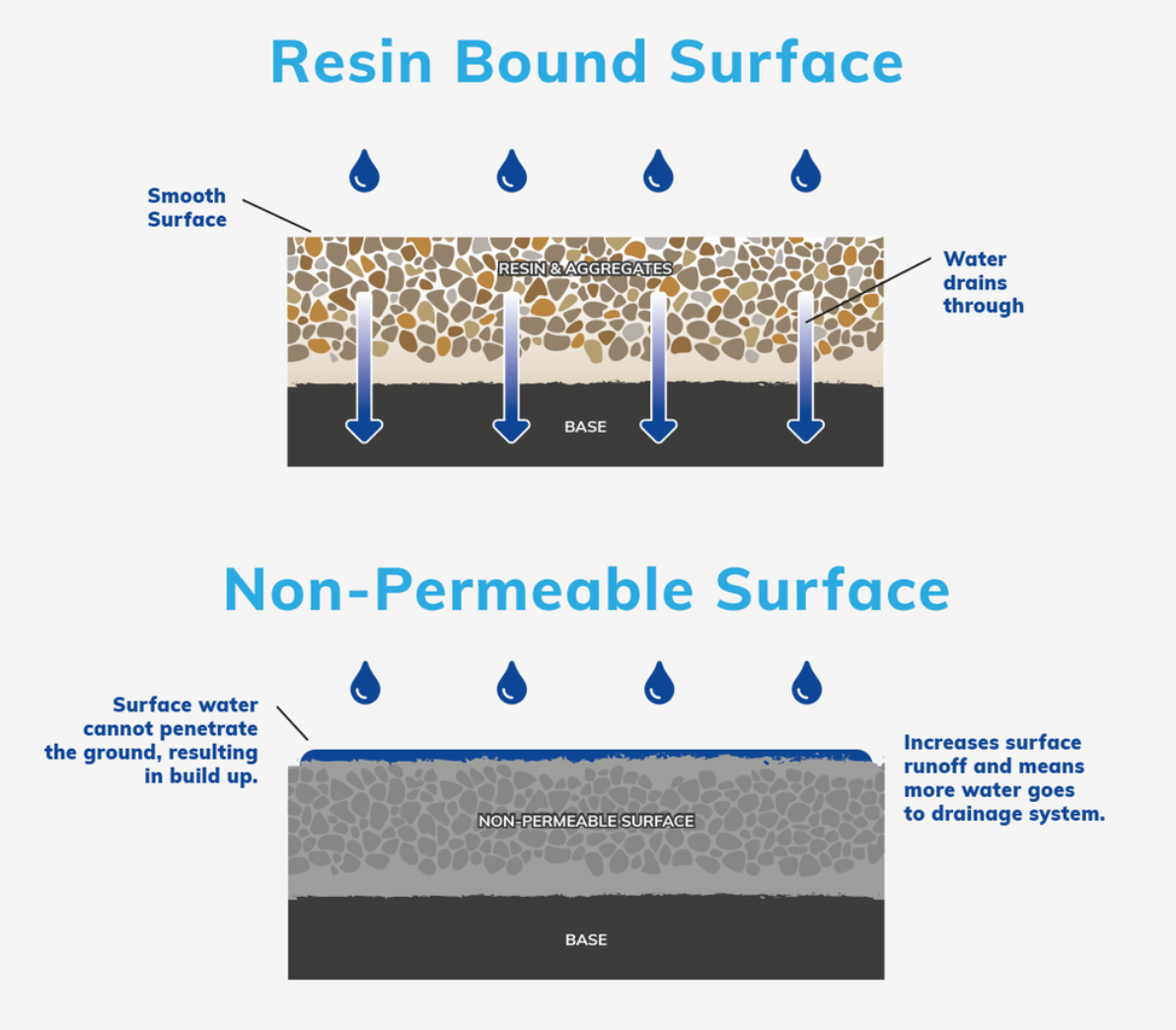
In the case of a permeable resin driveway, this effect is achieved through a combination of specially mixed resin and aggregate materials. When installed correctly, the surface contains tiny gaps between stones that allow rainwater to pass through freely.

This makes resin bound systems one of the most effective modern driveway solutions for managing rainwater.

Resin bound vs Resin bonded: Why only one is permeable

Not all resin driveways are the same. The terms resin bound and resin bonded are often confused, but only one of them provides true permeability.

Resin bound driveways mix resin and aggregate together before installation. This creates a smooth, porous surface where water can pass through small gaps between stones.

Resin bonded systems, on the other hand, involve applying resin to a base layer and scattering stones on top. This creates a sealed surface that behaves more like concrete or tarmac, meaning water runs off rather than draining through.
Comparison: Resin Bound vs Resin Bonded

Feature Resin Bound Resin Bonded
Permeable Yes No
Water drainage Through the surface Runs off the surface
Loose stones No Yes
Suitable for driveways Yes Limited
Maintenance Low Higher

For homeowners considering a resin driveway in Dublin or anywhere in Ireland, resin bound is the system that delivers proper drainage and long-term performance.

Understanding SuDS compliance

SuDS stands for Sustainable Drainage Systems, a modern approach to managing rainwater in built environments. Instead of overwhelming traditional drainage networks, SuDS solutions encourage water to drain slowly and naturally through permeable surfaces.

Driveways play a significant role in this process. Traditional materials such as concrete, paving, or tarmac create impermeable surfaces that force water to run into drains. During heavy rainfall, this can contribute to flooding and overloaded drainage systems.

A permeable resin driveway supports SuDS principles by allowing water to pass through the surface and into the ground beneath, reducing runoff and helping maintain natural water flow.

This is one of the reasons resin bound driveways are increasingly popular in residential developments across Ireland.

resin bound vs resin bonded

Why permeable driveways matter in Ireland

Ireland’s climate includes frequent rainfall, which means effective drainage is essential for outdoor surfaces. Driveways that cannot manage water properly often develop puddles, slippery areas, or drainage problems around the property.

Permeable resin driveways help prevent these issues by allowing water to drain naturally through the surface structure. This reduces standing water and helps keep the driveway usable even during wet weather.

For properties in Dublin and surrounding counties, permeability is especially important in urban environments where traditional drainage systems may already be under pressure.

How a resin driveway achieves permeability

The permeability of a resin driveway is not just about the top layer. The entire structure of the installation must support water drainage.

A typical permeable resin driveway includes several layers:

  • A stable permeable base (often porous asphalt or concrete)
  • A properly prepared sub-base
  • A resin-bound surface layer

These layers work together to allow rainwater to pass through the surface and gradually filter into the ground below.

When installed correctly, this structure ensures that water does not pool on the surface, even during heavy rainfall.

Maintenance of a permeable resin driveway

One of the advantages of a permeable resin driveway is its relatively low maintenance requirements. Because the surface is smooth and seamless, there are no joints where weeds can easily grow.

Occasional cleaning and light pressure washing are usually enough to keep the driveway looking clean and ensure the drainage pores remain open.

Over time, natural debris such as leaves or dirt may collect on the surface, so periodic maintenance helps preserve the driveway’s permeability and appearance.

Why resin driveways are popular in Dublin and across Ireland

Homeowners choosing a resin driveway in Dublin or elsewhere in Ireland are often looking for a combination of durability, modern appearance, and effective drainage.

Resin bound surfaces provide all three. They offer a smooth finish, excellent water permeability, and a long-lasting driveway solution that performs well in Ireland’s weather conditions.

When installed professionally with proper preparation, resin driveways provide both functional and environmental benefits.

Final thoughts

A permeable resin driveway offers far more than visual appeal. Its ability to manage rainwater effectively makes it one of the most practical driveway solutions for properties across Ireland.

By supporting natural drainage and aligning with SuDS principles, resin bound systems help reduce surface water problems while delivering a clean, durable finish. Understanding how permeability works allows homeowners to make better decisions when choosing a driveway material.

When installed correctly, a resin driveway provides a surface that looks modern, performs reliably, and handles Ireland’s rainfall with ease.

Frequently Asked Questions

Is a resin driveway permeable?

Yes, but only resin bound systems are permeable. They allow water to drain through the surface and into the ground below.

Resin bound driveways are typically SuDS compliant because they allow natural water drainage and reduce runoff.

Yes. Because water drains through the surface, puddles and standing water are far less likely to form.

Yes. Resin bound surfaces perform well in wet climates because they are designed to manage rainwater effectively.

With proper installation and maintenance, resin driveways can last 15–20 years or more.

Seraphinite AcceleratorBannerText_Seraphinite Accelerator
Turns on site high speed to be attractive for people and search engines.